
Our Padel Courts

Turnkey Padel Court Solutions – Models, Design and Construction

Professional Padel Court Models Designed for Performance and Durability

100% PADEL designs, manufactures and installs professional padel courts for clubs, investors and sports facilities worldwide. As an experienced padel court manufacturer and construction company, we offer turnkey solutions covering every stage of the project, from court design to final installation.
Each padel court model can be fully customized to meet technical, aesthetic and operational requirements. Our courts are suitable for both indoor and outdoor installations and comply with international padel standards.

Our Padel Court Models

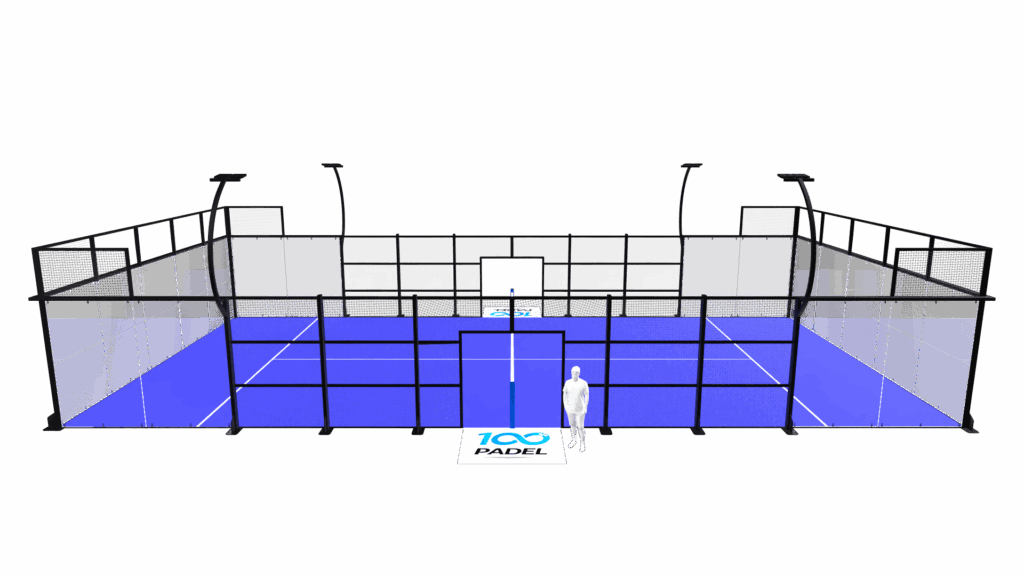
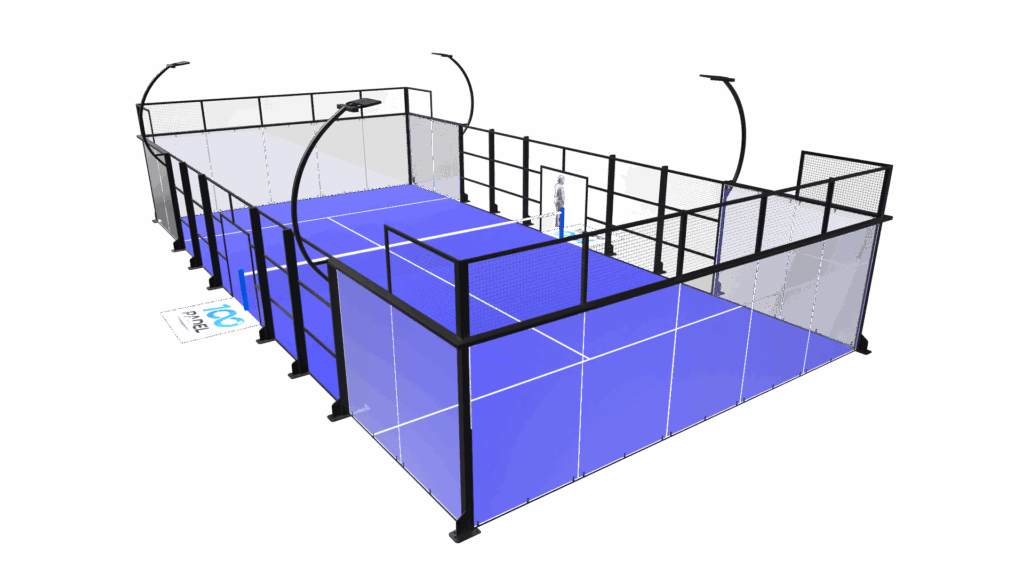
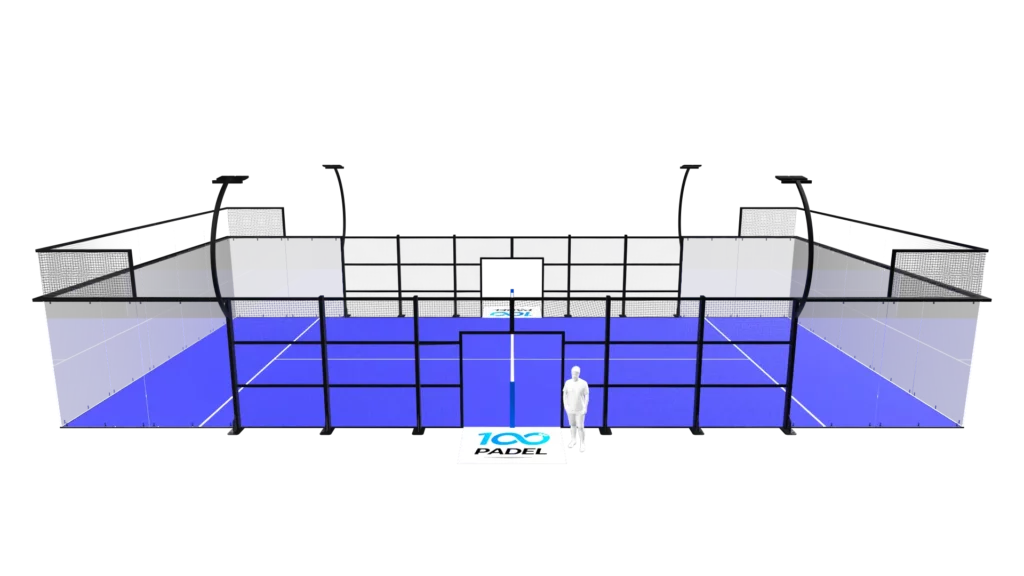
Panorama Court

A balanced padel court model combining visibility and structural stability

The Panorama Court is an ideal solution for clubs seeking excellent side visibility while maintaining optimal structural rigidity. This model is widely used for professional and high-level amateur padel court installations.

Technical specifications:

  • 8 modules of 300 × 200 cm: galvanized steel tubes 80 × 40 × 2 mm with electro-welded mesh 50 × 50 × 4 mm
  • 4 corner posts: galvanized steel tubes 80 × 80 × 3 mm
  • 4 base reinforcements of 400 cm: galvanized steel tubes 80 × 80 × 3 mm
  • 4 P-shaped modules of 400 cm: galvanized steel tubes 80 × 80 × 3 mm
  • 4 door modules: galvanized steel tubes 80 × 40 × 2 mm with electro-welded mesh 50 × 50 × 4 mm, L-shaped entrance
  • 2 net posts: galvanized steel tubes 80 × 80 × 3 mm
  • 2 back walls: galvanized steel tubes 80 × 80 × 3 mm, 10.03 m long for glass support, plus 40 × 20 × 3 mm upper structure with electro-welded mesh
  • 20 mesh covers ensuring protection of mesh connections and door areas for maximum player safety

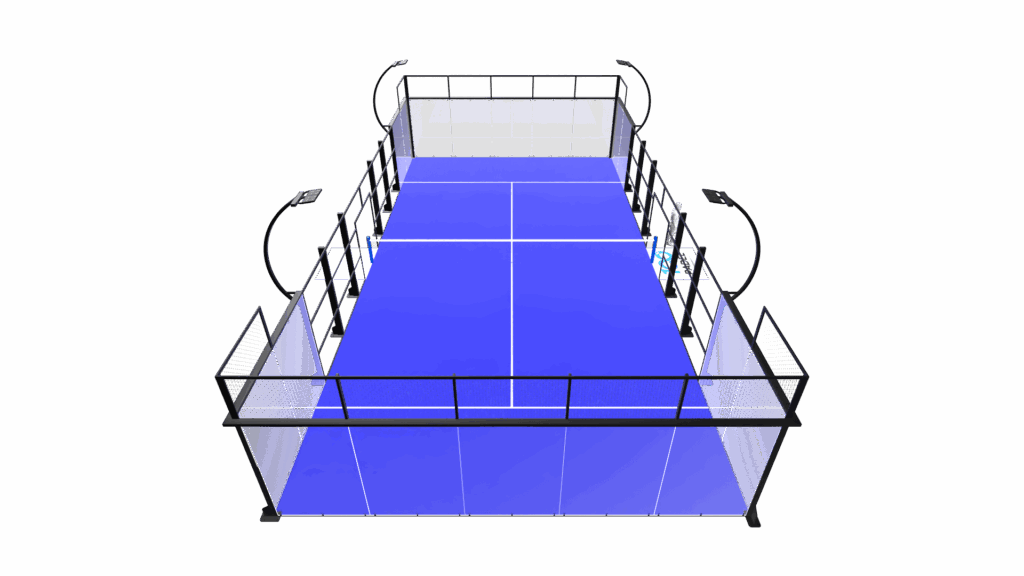
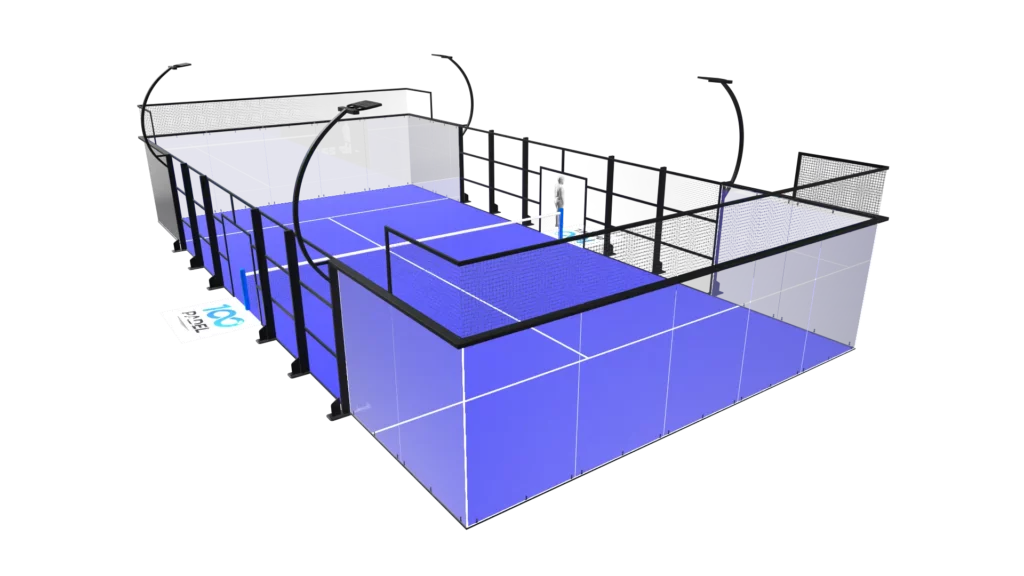
Full-Panorama Court

Premium padel court model with maximum visibility

The Full Panorama Court is a premium padel court model designed to offer unobstructed visibility on all sides. It is particularly suited for clubs, competitions and venues focused on spectator experience and video coverage.

Technical specifications:

  • 8 modules of 300 × 200 cm: galvanized steel tubes 80 × 40 × 2 mm with electro-welded mesh 50 × 50 × 4 mm
  • 4 base reinforcements of 400 cm: galvanized steel tubes 80 × 80 × 3 mm
  • 4 P-shaped modules of 400 cm: galvanized steel tubes 80 × 80 × 3 mm
  • 4 door modules: galvanized steel tubes 80 × 40 × 2 mm with electro-welded mesh 50 × 50 × 4 mm, L-shaped entrance
  • 2 net posts: galvanized steel tubes 80 × 80 × 3 mm
  • 2 back walls: galvanized steel tubes 80 × 80 × 3 mm, 10.03 m long glass-supporting structure with upper electro-welded mesh
  • 20 mesh covers for enhanced safety

Advantages of a Padel Court

coût d'un terrain de padel

Cost-effective sports infrastructure

The cost of a padel court is significantly lower than that of a tennis court, making padel an attractive investment for clubs and private operators.

structure terrain

Fully customizable structure

Each padel court design can be adapted in terms of structure, materials, colors and equipment to match your project and site constraints.

revenu terrain

Multiple revenue streams

Padel courts generate income through court rentals, padel academies, tournaments, exhibitions and corporate events.

éclairage terrains

International compliance

All courts are built in accordance with the official standards of the International Padel Federation (FIP).

implantation terrains

Optimized court installation

Two padel courts can often be installed on an existing tennis court, optimizing available space.
filet de padel 2

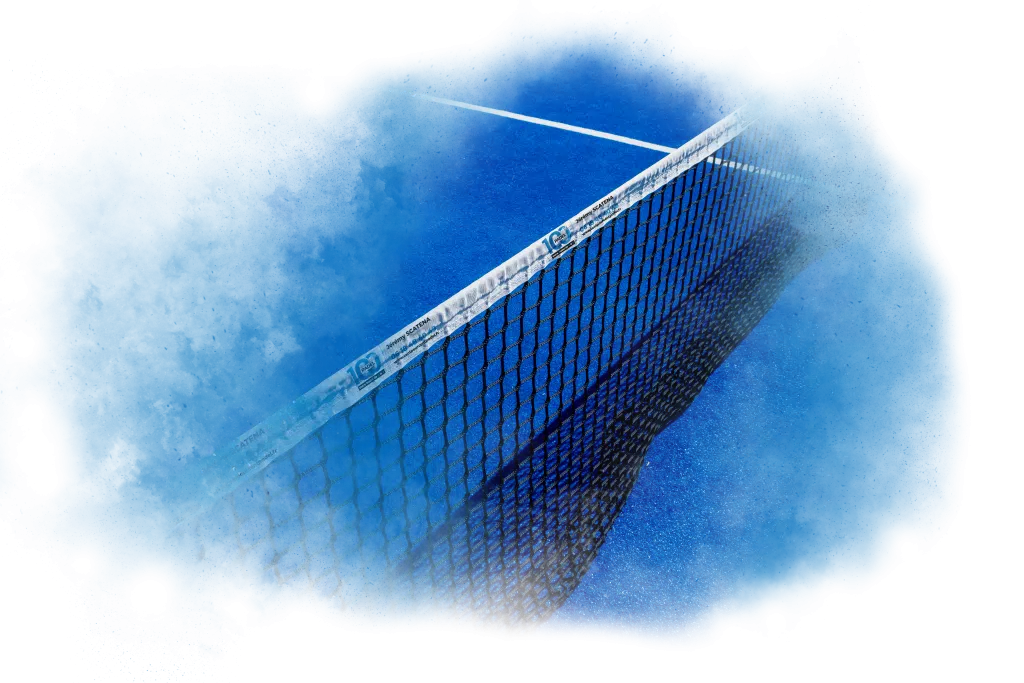
The Net System

image 100% padel

100% PADEL courts are equipped with a high-strength polypropylene net, designed specifically for padel and compliant with the NIDE 2004 Padel standard.

The net is tensioned using a 3.5 mm elastic steel cable fixed to central posts:

  • one post with an anchoring ring
  • one post with a winch and removable handle for precise tension adjustment

Net height:

  • 920 mm at the sides
  • 880 mm at the center

Guarantees and Technical Compliance

  • Compliance with International Padel Federation (FIP) standards
  • S235 quality steel
  • Painting and coating according to Quali Steel Coat standards
  • Tempered safety glass (ESG), 10 mm or 12 mm
certification iso 9001-2008
logo iaf

High-Performance Artificial Turf for Padel Courts

We use only premium artificial turf to guarantee optimal playing conditions throughout the year.

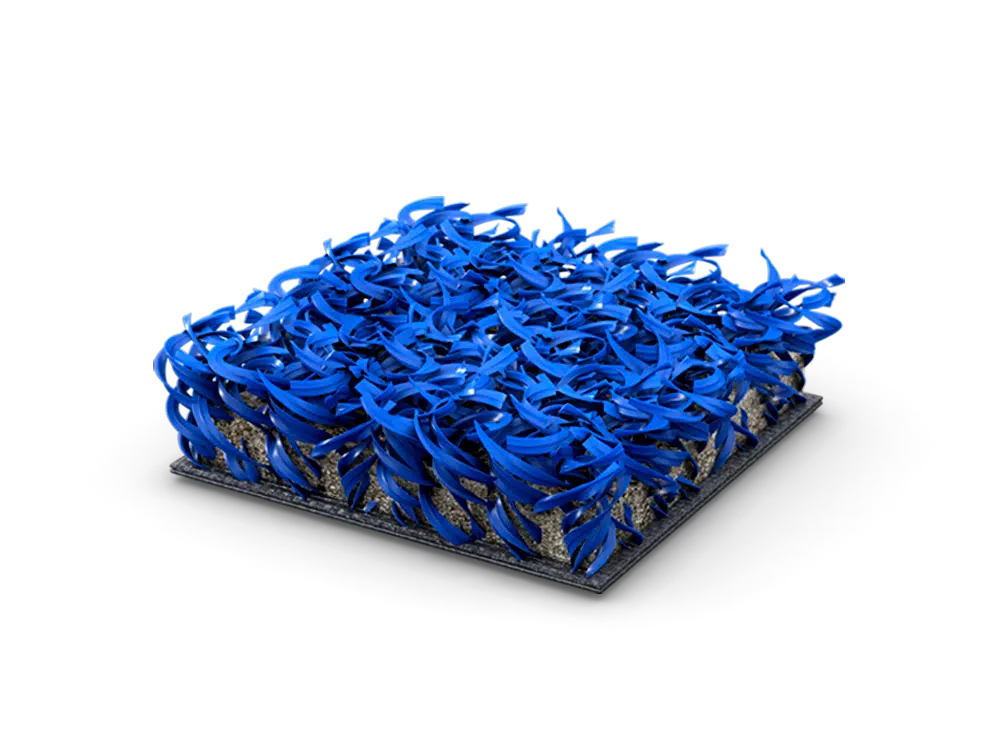
Supercourt XN

Properties:

  • Textured monofilaments with central rib
  • Cuboid-shaped monofilaments with concave sides, four grooves and asymmetrical ribs

  • DTEX : 8.610
  • Höhe : 10 mm
  • Füllung : Quarzsand

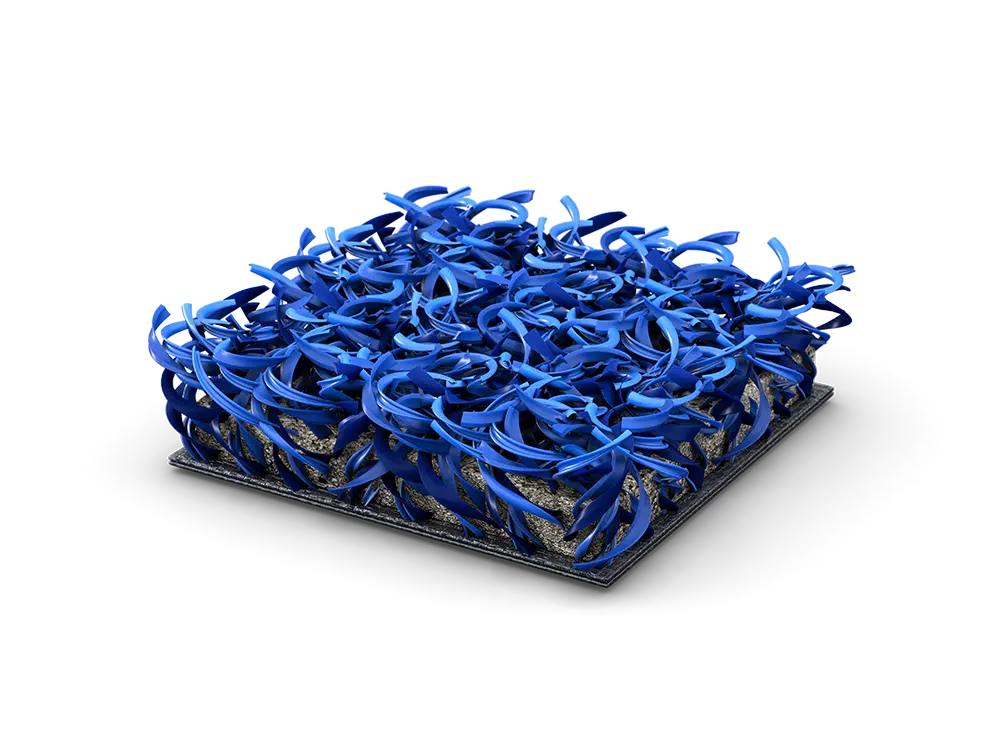
Premier Supercourt X3

Properties:

  • XNOVA cuboid-shaped monofilaments with concave sides
  • XOMEGA semi-circular monofilaments
  • XDELTA triangular monofilaments

  • DTEX : 8.200
  • Höhe : 10 mm
  • Füllung : Quarzsand

Competition-Approved Padel Court Colors

Our padel court surfaces are available in colors officially approved for national and international competitions :
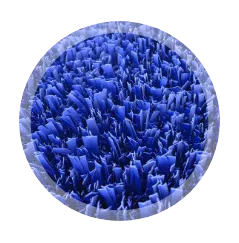
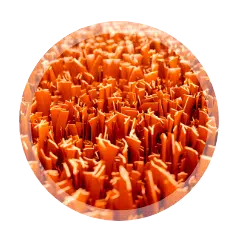
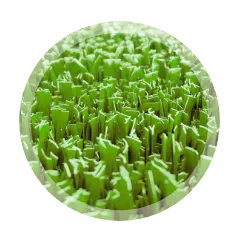
Blue padel turf – Orange padel turf – Green padel turf

pelouse bleue cout de padel
pelouse orange cout de padel
pelouse verte court padel

Frequently Asked Questions About Padel Courts

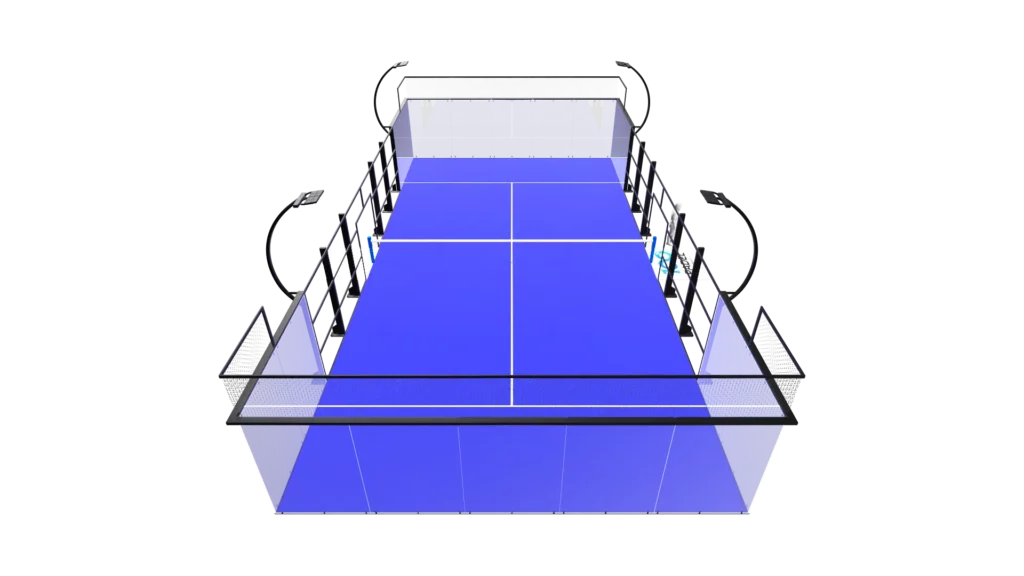
 A padel court is generally 10 meters wide and 20 meters long, with glass or solid walls on three sides and a mesh fence on the fourth side. These dimensions may vary slightly depending on local regulations or site constraints.

Construction time depends on several factors: material availability, weather conditions, workforce, and project specifications. On average, building a padel court takes between 4 and 8 weeks, but this may vary depending on the scope of the project.

A padel court generally consists of the following elements:

  • Playing surface: Usually artificial turf or sand, offering shock absorption and player comfort.
  • Walls: Glass or masonry on three sides, allowing ball rebound during play.
  • Fence: Mesh panels on the fourth side to contain the ball.
  • Lines: Court markings for service boxes, boundaries, and fault zones.
  • Lighting: Required for indoor or outdoor courts to ensure optimal playing conditions at all times. These components may vary slightly depending on local regulations or specific site requirements.

The glass thickness of padel court walls depends on standards and specific construction requirements. Typically, safety glass with a thickness of 10 to 12 mm is used.
In some cases, slightly different thicknesses may be required depending on local safety and durability requirements. In all cases, applicable safety standards must be met to ensure strength and resistance during play.

Yes, padel courts are generally delivered with sand, which is used as infill for the playing surface. The sand is evenly distributed to create a stable and uniform surface.
This sand layer helps absorb shocks, improves grip, reduces injury risk, and enhances drainage by absorbing moisture—particularly important for outdoor courts exposed to changing weather conditions.

The cost of a padel court can vary widely depending on factors such as material quality, court configuration, construction specifics, and labor costs.
In general, construction costs range between €20,000 and €80,000, but can be higher depending on project complexity and additional options such as lighting, drainage systems, and safety equipment.
It is recommended to request several quotes to obtain accurate pricing based on your needs and budget, and to take long-term maintenance and operating costs into account.

Sand is used on padel courts for several reasons:

  • Shock absorption: It cushions impacts, reducing stress on players’ joints.
  • Surface stability: It creates a uniform and stable surface for smooth movement and precise shots.
  • Better grip: It improves traction, making quick movements and direction changes safer.
  • Drainage: It promotes water drainage, keeping the surface playable even in wet conditions. Overall, sand improves safety, stability, and playing quality.

In most cases, it is possible to install two padel courts on a single tennis court, depending on available space and local regulations.
Padel courts are smaller than tennis courts, making it feasible to divide a standard tennis court into two padel courts, sometimes with adjustments to dimensions and equipment. Consulting a specialist is recommended to assess feasibility and ensure compliance with safety standards.

Yes, a padel court can be installed on an existing tennis court by converting it into one or more padel courts. This approach is commonly used to optimize existing facilities.
The conversion typically includes:

  • Adjusting dimensions and line markings
  • Installing glass or solid walls
  • Adapting or replacing the playing surface

Adding equipment such as nets, lighting, and seating
Specialized companies should carry out this type of conversion to ensure compliance with safety and quality standards.

Yes, orientation can influence playing comfort and court performance, particularly regarding:

  • Sun exposure: Minimizing glare for players
  • Wind: Reducing disruption during play
  • Lighting: Ensuring even illumination for floodlit courts
  • Drainage: Helping rainwater flow away efficiently
    While not as critical as in some other sports, proper orientation improves overall play quality.

Special features of padel court lines
Court lines clearly define play zones and rules:

  • Service lines: Define the service area
  • Baselines: Mark the back of the court
  • Sidelines: Define lateral boundaries
  • Center line: Divides the court into two halves (where applicable)

Stop lines / glass baseline references: Used on courts with glass walls to judge in/out situations
These markings are essential for fair and consistent gameplay.

Indoor padel courts typically require a minimum clear height of 6 meters. This ensures players can play freely, especially for high shots such as lobs. Local building regulations should be checked to confirm minimum height requirements.

Permit requirements vary by location and local regulations. In many cases, a building permit or official authorization may be required, particularly for major construction or installations in regulated areas.
It is advisable to consult local planning authorities to determine applicable requirements before starting the project.

Padel is generally considered quieter than sports such as tennis or football, but noise can still occur, especially during intensive use or when multiple courts are active.
Main noise sources include ball impacts, player conversations, and contact with the walls.
Noise mitigation measures may include:

  • Regulating playing hours
  • Using sound-absorbing materials
  • Landscaping with hedges or trees

Maintaining open communication with neighbors
With proper planning, noise impact can usually be minimized.

Padel court construction may be subject to specific requirements depending on regulations and site conditions, including:

  • Safety standards
  • Building and urban planning regulations
  • Zoning rules
  • Building permits

Accessibility standards for people with reduced mobility
Consulting local authorities and complying with all applicable regulations is essential to ensure safety, legality, and long-term functionality.

Yes, replacing the turf surface of an existing padel court is generally straightforward, especially if the surface is worn or damaged, or if you wish to update its appearance. This is often more cost-effective than rebuilding the entire court.
The process usually includes:

  • Removing the old turf
  • Preparing and repairing the base
  • Installing the new turf according to manufacturer guidelines

Securing edges and adjusting court markings
Choosing high-quality turf specifically designed for padel and using experienced installers ensures optimal playability, comfort, and durability.